May was another big reading month for me. I’m as hungry ever, maybe even hungrier, and it seems I may be a bottomless pit when it comes to words.
This month features books by Karen Russell, Dorthe Nors, Ken Kesey, Calvin Kasulke, and Hanif Kureishi.
Read more: Reading Roundup — May 2025
The Antidote by Karen Russell (2025)
I grabbed myself this book by taking the trek down to Gainesville to see Karen Russell at Lauren Groff’s bookstore The Lynx. She was more than I could’ve hoped for, and in cracking this book open, my expectations seemed limitless.
And yet, she managed to exceed them anyway.
Readers of Karen Russell will understand her masterful ability to weave magic into mundane, earthly circumstances. The Antidote is full of it, though it does take a bit of table setting before we get to really chew on the thing. A lot needs to be sowed before you can reap the magic.
On Goodreads, it seems I wrote, “Karen Russell is my pope.” I stand by that.
If you ever get the privilege to read my novel The Lunatic, you’ll understand why a book like this—while a magnificent must read—frustrates me. Midwest setting, natural disasters, magical places, supernatural artists. Maybe’s the Florida in us, but Karen Russell and I were ripped from the same cloth. I wish for the chance to let her see it.
I can’t recommend this book enough. There’s the Prairie Witch, the sentient scarecrow, the time-travelling camera, the era of six-on-six girls’ basketball in which one half played defense and the other played offense.
Karen Russell is one of America’s treasures and perhaps my favorite living writer. What a fucking G, man.
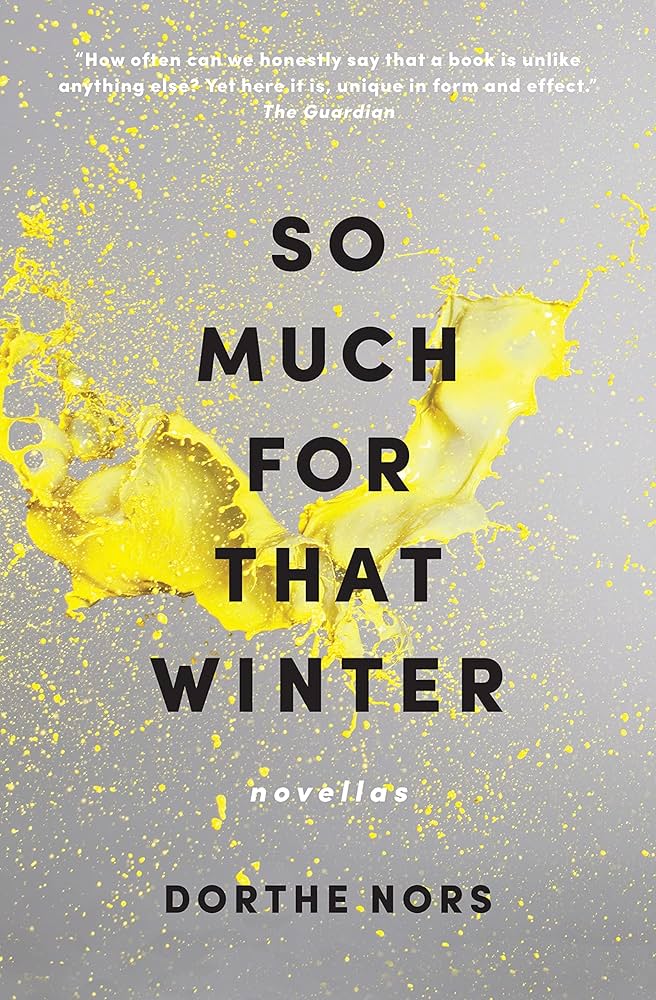
So Much for That Winter by Dorthe Nors, translated by Misha Hoekstra (2016)
I picked this one up at AWP years ago, either Tampa or DC, and had picked it up and put it back down a handful of times.
Part of my hesitation was due to the formal novelty of the book. It’s a collection of two novellas, each written in single sentence / listicle bursts, which makes for a quick read, but requires the discipline to absorb the content as you go.
So Much For That Winter is a nice exercise in craft. I think novellas are already a tough form (though they may be a perfect form) and when we break it to try something new, my instinct is to think it won’t work.
But each of the novellas here work. The first is more successful than the second, but even the second had lines that caused me to pause and breathe.
If anything, the project earned my trust, so the next Nors book will be a must-read for me.

One Flew Over the Cuckoo’s Nest by Ken Kesey (1962)
Here’s another classic I’d been flirting with for years. I’ve never seen the film and had no real inkling what the story was about; was only familiar with the title through the zeitgeist.
There’s something off about the ethos of the book for me. Sure, man doesn’t want Big Brother (or in this case, Big Sis) keep him down … and that’s it? Maybe it’s just an outdated bit of philosophy, something that resonated in the 60s but is mostly empty now. And as one reads, you can’t help but wonder if the author hated women. They play two roles: temptress or warden, and there doesn’t seem to be real respect for either.
Kesey is a good writer, though. The hallucinatory moments and the party scenes were great reads and our narrator, the Chief, is a novel invention. Something like a mentally ill, native American Nick Carraway.
Happy to have read it, though not sure I was missing much before.

Several People Are Typing by Calvin Kasulke (2021)
The inaugural read for the VERY exclusive Taco Bell Book Club (shout out to my sister Gabbi). We chose this one because it was included on a list of books to read if you like Apple TV’s Severance.
We ended up being a certain kind of survey for the book as well, since the book is completely written in Slack messages. Characters use emojis and speak in different group chats, and while I have experience with Slack and my sister does not, it didn’t prevent us from enjoying the book equally.
It’s a 270-page book, but it could be read in a day, and I think that’s my biggest gripe of the book. For all its novelty—the structure, the sentient slack bot, the plot of getting sucked into Slack via a spreadsheet on coats—the book skips over moments that could’ve been profound, opting for solutions that read too easy and shallow. I wanted more from it, but at least I’ll always have :dusty-stick:
I applaud Kasulke for not only conceiving of the project, but for seeing it through and leaning into the funny bits. There were a handful of times I was sitting in the coffee shop, laughing out loud and collecting confused looks from baristas. It’s hard to be funny and meaningful, and Several People Are Typing manages to do both.
On the Taco Bell hot sauce scale, it gets a “HOT” which is perfectly fine. If you’re in a rut and need a book to shake the rust off, I highly recommend starting with this one.
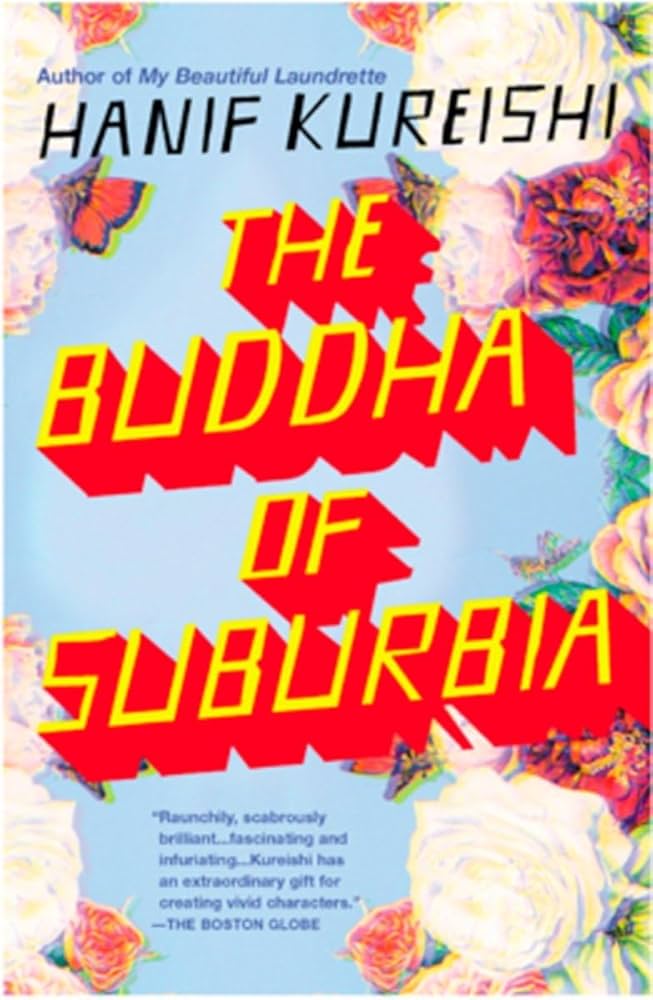
The Buddha of Suburbia by Hanif Kureishi (1991)
If I’m correct, I purchased this book from the FSU library my freshman year of college. There’s a chance Bush was still president, but I might’ve grabbed it after the election too.
I couldn’t tell you what’s taken me so long to read it. The reason I’ve held on is the same reason I bought the thing to begin with: the title slaps.
The novel isn’t as spiritual as you’d expect, but it is centered around a political philosophy. Our protagonist is a first-generation Brit whose parents are Indian immigrants. As the country transitions from throughout the 70s, norms of all kinds are challenged, and we follow Karim as he aches for something new. It’s a coming-of-age tale through the lens race and class tensions, specifically of working-class minorities in the greater London area.
It’s the not the book I thought it would be, but that was fine. I appreciated the gritty realism, the seamless transitions in time, and the progressive approach to sex.
Karim was also a strong character to follow. He’s deeply flawed, driven by desire and adolescent impulses, and there’s no push to redeem him either. The “Buddha” of the story, Karim’s father, is just as flawed, and this honest humanity makes the book a compelling read—even if the ending sort of just tapers off.
 Caleb Michael Sarvis