Reading Roundup: March 2025
My reading habits have become so compulsive, I’ve started to consume books somewhat rapidly/rabidly, ignoring proper digestion etiquette and simply moving onto the next course before I can get the gas out. The solution to this seems easy enough, write down my thoughts before they fade into the ether of my subconscious. Who’s to say if it will work. Anyway, welcome to my monthly Reading Roundup.
Read more: Reading Roundup – March 2025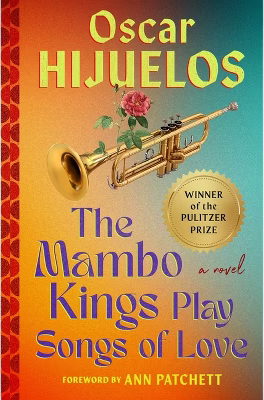
The Mambo Kings Play Songs of Love by Oscar Hijuelos (1989)
I have a list of books printed in my office titled “Pulitzer Prize Reading List: 1990 – Onward” and it exists because I want to read every book to have won the Pulitzer Prize in Fiction in my lifetime.
The Mambo Kings was technically published in 1989 and because I wasn’t born until September 1990, it was likely awarded the prize before my life began. I say all this because I wish I would’ve considered all this before reading this dud of a novel.
Maybe it’s a metaphor for impotence, the way the novel starts off so strong, and just when it’s time to really get down to business, stumbles and fails to reach a suitable climax. Ironic, since you can’t turn to a page without reading a description of someone’s genitals or other sexualization of another character’s body.
And don’t get me wrong, I love a sexy book, and I extend grace to all who try to write a well-executed sex scene—but The Mambo Kings covers sex like a compulsion. I can’t help but wonder if Oscar Hijuelos had a hard on every time he touched a typewriter.
For those interested in music, the rise of Fidel Castro, and the ways in which toxic masculinity was covered well before it was a buzz phrase, the book might be worth the read for you. But if I’m being honest, you probably only need to read half of it to get the big idea.
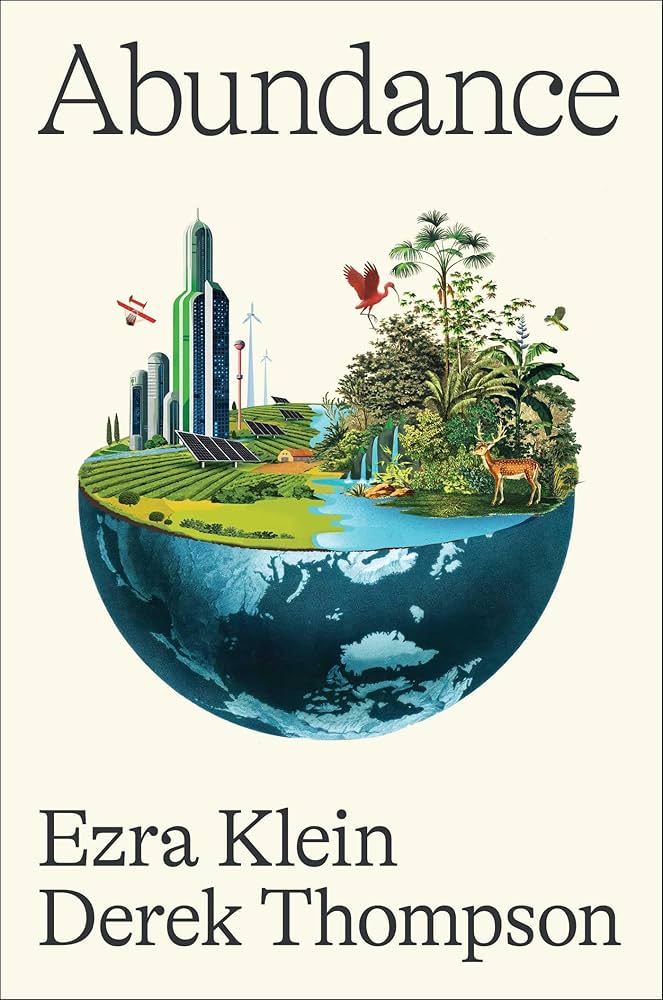
Abundance by Ezra Klein and Derek Thompson (2025)
I’m a regular listener of Derek Thompson’s podcast Plain English and reader of his stories in The Atlantic. I’m less familiar with Ezra Klein, though I’ve come across his work for The New York Times since I read it every day.
I’m also a frustrated Democrat who feels like the party—much like the Republicans—is too online to get anything done. Buzzwords and catch phrases and big checks … but what does anyone have to show for it?
So, as Derek Thompsons began to tease his new book Abundance, I grew cautiously optimistic that somebody had figured out the source of that frustration. And they did.
I won’t step on their toes, but liberal spending policies that rethink regulations can work. We don’t need more “process” in government. We need more outcomes. We can support unions while also engaging in competitive bids. To put our feet in a strict Big Government camp is to set the party up for loss after loss after loss.
I think every politically-minded person—especially those who are center-left—should read this book. It’s a necessary and eye-opening read for progressive politics. It’s a critique, yes, but a constructive critique. It reimagines Democrats as the party that builds, rather than the bureaucrats who legislate.
Building needn’t be the enemy of conservation, and to limit ourselves to that dichotomy is to lack both an imagination and honest, critical thinking.

The Passenger by Cormac McCarthy (2022)
Two things to put this into context. First. In grad school, I wrote my literary analysis paper on the function of imaginary characters in fiction. Think Fight Club, Donnie Darko, The Third Policeman, and other short stories. Second. I’ve spent the last year manically putting together a short story collection with a clear philosophical bent. It’s about defining something new without getting too explicit about it. One that alludes to and flirts with quantum mechanics.
I knew nothing about The Passenger before I started reading, but if you’ve read it, and you’ve taken in the context I presented above, then you must understand how I adored this book. It fucking slaps.
The only McCarthy I’d read prior to this was The Road, which itself was a bit of research for what would become my novel The Cadence of Doom. I won’t be the first to tell you that Cormac McCarthy slings with the best of them. If you’ve read and enjoyed Denis Johnson’s The Largesse of the Sea Maiden (my favorite book of all time), then you’ll be right at home with this. Something about those end-of-life publications seem to capture what fiction is all about.
The Kid, flipper and all, is one of my favorite literary inventions in quite some time. While his function isn’t novel—imaginary friends are projections of the subconscious—the idea that he’d be paired with a suicidal genius is as fun as it gets. I’m not one for diagnoses in stories, so the whole schizophrenia part felt superfluous, but that’s okay, because McCarthy’s deployment of The Kid is rad as hell.
I’ve written all this without mentioning the wrecked airplane, the Feds, and Bobby’s relationship to the Manhattan Project. That’s how good this book is. Do yourself a favor and read it.
 Caleb Michael Sarvis