My reading habits have become so compulsive, I’ve started to consume books somewhat rapidly/rabidly, ignoring proper digestion etiquette and simply moving onto the next course before I can get the gas out. The solution to this seems easy enough, write down my thoughts before they fade into the ether of my subconscious. Who’s to say if it will work. Anyway, welcome to my monthly Reading Roundup.
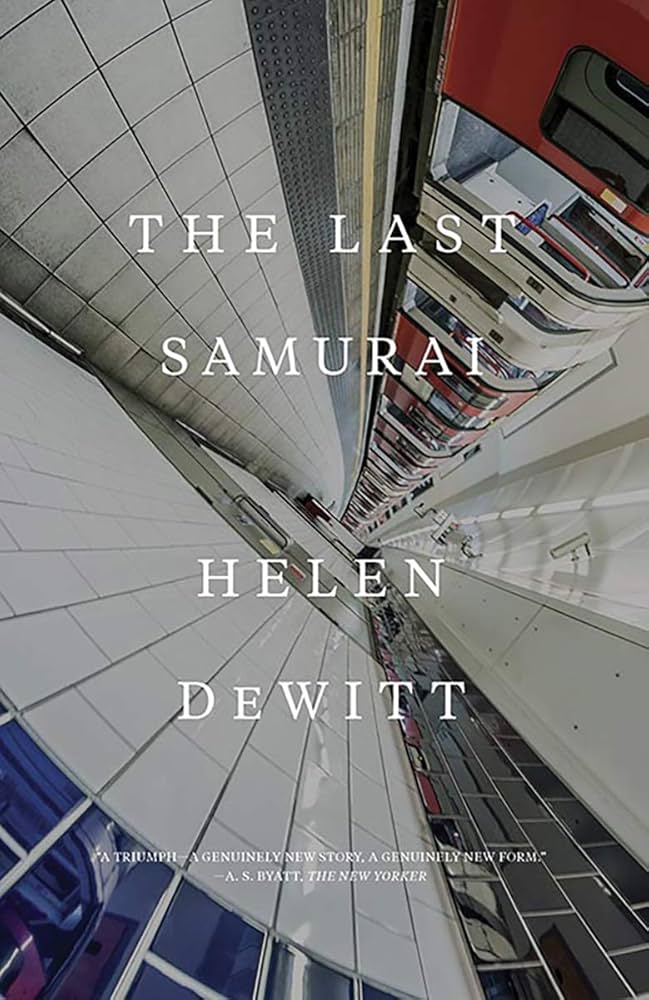
The Last Samurai by Helen DeWitt (2000)
Not to be confused with the Tom Cruise movie. Please do not confuse this with the Tom Cruise movie.
A good samurai will parry the blow.
Christian TeBordo has been talking about this book as long as I’ve been paying attention to him—which admittedly, goes in cycles, sorry, TeBordo—but after catching up on his work and really enjoying it, it felt reasonable to dive into what he’s decreed the greatest novel of the 21st century.
I adored this book, so much so I wished I’d watched or researched Seven Samurai prior to reading, just so I could’ve enriched my experience with the text. The “rules” of the book take some getting used to—inconsistent technical choices that you learn to accept and ride—but the spirit—in which Sibylla expects the most from her son, Ludo, and he craves to know the identity of his father, in which Sibylla proves to be frustratingly unhelpful—lingers with me however many weeks later.
Sentiment need not be so sentimental. I’m allergic to weak spirits, to people who crash out from the grind. This novel is all grind, but it’s a reminder that genius—creative or not—is simply not enough. The end is crushing, for no other reason than a truth was made more real.
As Ludo stalked and confronted seven potential fathers, I often felt paralyzed by the thought of what my kids will think of me one day, and whether my not being a scholar of Seven Samurai would be a disappointment to them. Then I remembered they already know who I am, and so long as I don’t disappear, I can keep their expectations reasonably low. Winner, winner.
A good samurai will parry the blow.

Martyr! by Kaveh Akbar (2024)
I really wanted to like this one more than I did. It has a lot of promise and a lot of interesting moments, but I think Kaveh Akbar is trying to do much in too few words/pages to really pack that punch.
Between dead parents and the conversation about the value of art, there’s an obvious relationship here between this novel and Donna Tart’s The Goldfinch, but the latter was over 400 pages longer. It allowed its big concepts to breathe. Martyr! seems more concerned with getting to the big reveal towards the end.
There was a lot of this book I enjoyed, particularly anything to do with the Brooklyn Museum, the dying artist who turned the museum into her death bed, and the disruptive dreams. Anyone who’s read my work knows that’s right up my alley—but through the course of my reading, I would get hung up on a bad line here, and awkward sentence there.
Towards the end, I realized it was a point of view issue. When Akbar writes from the perspective of Orkideh or Arash, he writes magnificently (probably because he is an accomplished poet). But when he switches to that removed third person for Cyrus, these chapters feel cheesier and less polished, which makes our protagonist borderline insufferable.
I hate to speak poorly of the book, because reading Martyr! really felt like reading a draft of my own work, but perhaps that’s why I feel so critical of it. I recognized those shortcomings and crutches so clearly because I suffer from them, too, and I don’t know—sometimes you just want a book to be better because it really could’ve been better.

Train Dreams by Denis Johnson
This was a second read for me. I’m not alone in loving Denis Johnson’s work, but I might’ve been in the minority of thinking this one was underwhelming the first time I read it nine years ago. Recently, I’d learned the writer of Sing Sing decided to adapt it for film. It’s a quick read, could be done in a day, so I figured why not.
I’m wondering now if I really read it the first time through. Johnson’s greatest strength is weaving poetics into genuinely interesting narrative. He wields ache without hysteria and makes magic out of dirt. Devastation arrives with the same aplomb as catching the train.
Robert Granier doesn’t seem like the kind of guy I want to hang out with, but he is the kind of sad and mad man I can’t seem to quit as a reader. His story slips, dream-like, into an epic and the myth of the wolf-girl is so rad I’m almost certain I slept through my first read all those years ago.
Never doubt Denis Johnson, kids.
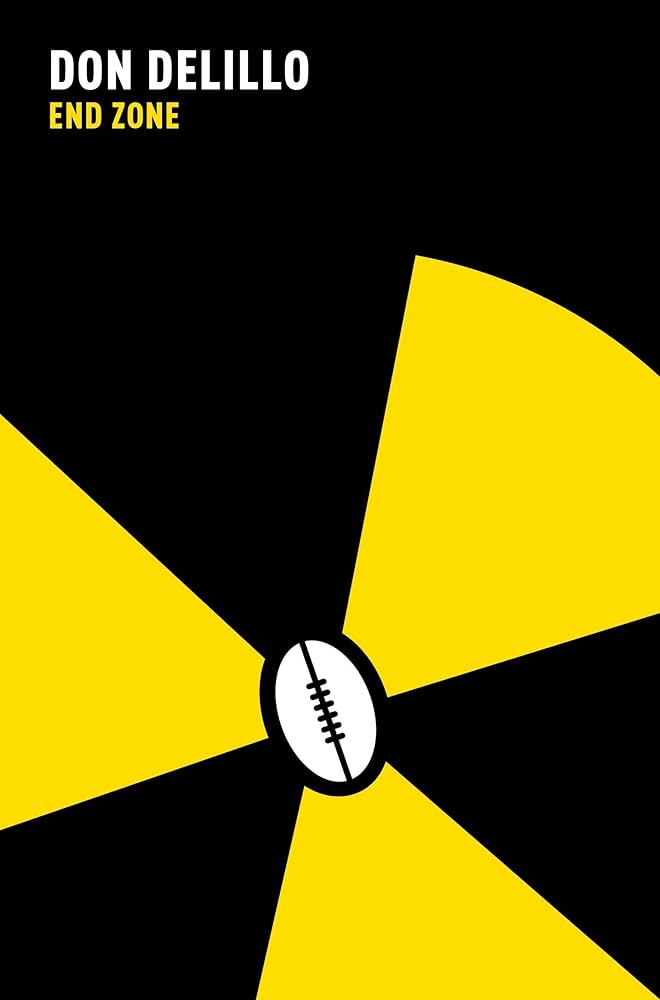
End Zone by Don DeLillo
This was a buddy read with my good friend Bill. I’m still awaiting his thoughts, which will surely offer something I’d yet to uncover myself.
Here’s another TeBordo recommendation. I’m still relatively new to DeLillo. I abandoned Underworld when I tried to read it four or five years ago, though I plan on returning to it this year maybe. I read Falling Man and found the second half disappointing. End Zone is pretty great, though.
It reminded me of Stephen Florida by Gabe Habash (college athlete life), or at least my memory of Stephen Florida and perhaps a little less unhinged, behaviorally. Conceptually, it’s absolutely unhinged.
I probably need to revisit this one when I’m not reading like a malnourished orphan. I was aching for a bit more of the nuclear warfare aspect of the novel, the play on the whole “end zone” thing that he was working with, and while I didn’t want anything catastrophic to occur, I did feel myself wanting something more.
Of course, there’s a sophistication in its simplicity. In football, we’re purposefully, desperately driving to the end zone. It’s the sole objective. Humanity is doing the same thing, with fewer helmets and somehow worse awareness.
The way DeLillo’s make this football field feel like a wasteland is great, and the quiet of the game, provides space the imagination fills with the sounds of pads, of huffing/puffing, of bones rattling—which makes Gary’s discomfort with silence all the more interesting.
When a teammate dies and the coach shoots himself, it feels kind of run-of-the-mill for a wasteland. College is like that: lots of room for intellectual and philosophical discovery, but ultimately a sort of dead place that happens to be filled with people.
It’s great literature because there’s more to say. The text is a petri dish for discussion, which is evident in my continuing to type. So let me say goodbye before I drift into a diatribe on why God isn’t real and answers are a fiction.
 Caleb Michael Sarvis